
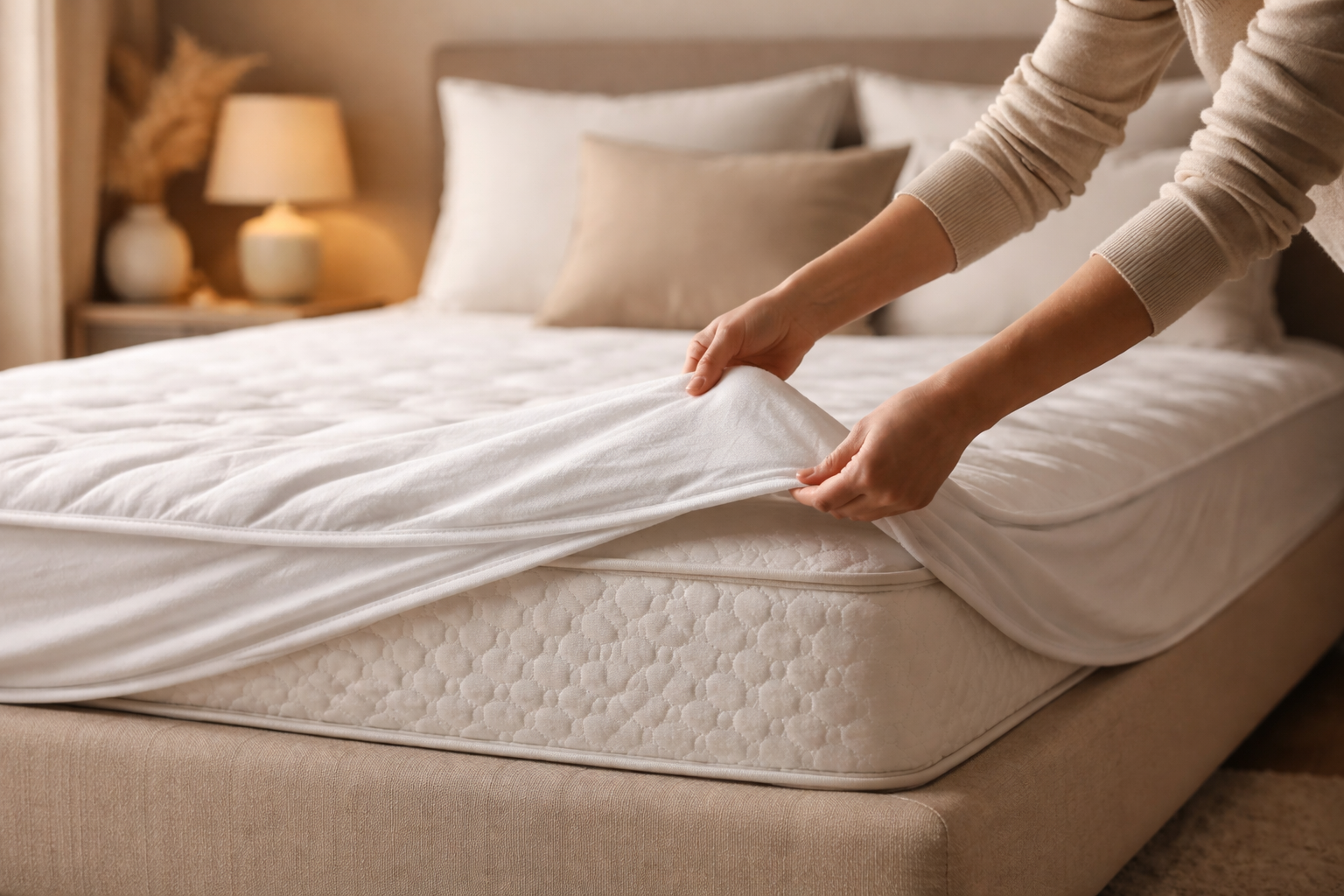
You've just bought a good mattress. You've made your bed, put on fresh sheets, and it feels great. Job done, right?
Not quite.
Without a mattress protector, that new mattress starts collecting things from the very first night. Sweat, body oils, dead skin cells, and moisture seep through your sheets and into the mattress layers below. You can't see it happening. But over weeks, months, and years, it builds up in ways that affect how your mattress smells, how it performs, how long it lasts, and what you're actually breathing in while you sleep.
A mattress protector solves all of that. It's a thin, fitted cover that sits between your sheets and your mattress, and it does a lot more than most people realise. Here's an honest look at what a mattress protector actually does, and why most sleep experts say yes, you need one.
5 Benefits of a Mattress Protector
1. It Keeps Dust Mites and Allergens Out
A typical used mattress can house anywhere between 100,000 and 10 million dust mites. These microscopic creatures feed on the dead skin cells you shed every night (around 1.5 grams daily, enough to feed one million dust mites) and thrive in the warm, slightly humid environment your body creates while you sleep.
Dust mites don't bite. But their waste particles are one of the most common indoor allergens in the world. When you move in your sleep, those particles become airborne and you inhale them. Over time, this can trigger sneezing, a congested or runny nose, itchy eyes, and for people with asthma or eczema, a significant worsening of symptoms.
A quality mattress protector with a tight enough weave (ideally with pores of 6 microns or less) acts as a physical barrier. It prevents dust mites from colonising the mattress and stops existing allergens from escaping into the air you breathe while you sleep.
Especially important in India: Warm, humid climates create the ideal conditions for dust mite populations to grow faster than in cooler, drier climates. A protector becomes less of an optional extra and more of a genuine necessity.
2. It Protects Against Spills, Sweat, and Stains
Mattresses are not washable. Once liquid gets in, it stays in. And it's not just obvious spills you need to worry about. Every single night, your body loses moisture through sweat. Even in a cool room, a person can sweat 200 to 700ml during sleep. That moisture travels through your sheets and slowly absorbs into the mattress beneath. Over time, this creates the yellowing, the musty smell, and the damp internal environment where bacteria and mould grow quietly.
A waterproof mattress protector stops all of this at the surface. Liquids bead up and can be wiped away. Your mattress stays dry, stays fresh, and the materials inside continue to perform the way they were designed to for years longer than they would otherwise.
Important note: Most mattress warranties specify that staining or soiling voids the warranty. A protector keeps your warranty valid and your investment protected.
3. It Makes Your Mattress Last Significantly Longer
Mattresses are built to last 7 to 10 years. But that lifespan assumes they're being looked after. In practice, sweat, oils, and moisture gradually break down the foams, fibres, and structural materials inside, causing them to degrade faster than they should.
A mattress protector acts as a consistent shield between your body and the mattress layers. It takes the daily wear instead. And because a protector is washable and replaceable, it absorbs what would otherwise have gone directly into the mattress.
Think of it the way you'd think about a phone case. The case takes the scratches and the knocks. The phone underneath stays in better condition for longer. A mattress protector works exactly the same way, protecting the more expensive thing underneath from daily damage it doesn't need to absorb.
4. It Keeps Your Sleep Environment Genuinely Hygienic
Sheets only protect what's on top. Your mattress itself, underneath, is absorbing everything that passes through. Bacteria thrive in the moist, warm environment a mattress provides. Mould spores can develop in areas where moisture has accumulated. Dead skin cells and body oils create a layer of biological material that builds up over years. None of this is visible, but all of it affects the quality of the environment you're sleeping in for 7 to 8 hours every night.
A mattress protector, washed every 1 to 2 months, maintains a genuinely clean barrier between you and all of that. Your mattress stays as clean as the day you bought it. The air near your face while you sleep is cleaner. And the overall hygiene of your sleep environment stays at a level that actually supports good health.
5. The Good Ones Don't Affect Your Comfort at All
This is the main reason people skip mattress protectors. They assume it'll feel plasticky, crinkly, or hot, like sleeping on a tarpaulin. This was true of older waterproof covers. It's not true of quality modern protectors.
Good mattress protectors today are made from breathable materials. They're waterproof but moisture-vapour permeable, meaning sweat can evaporate through while liquid can't get in. They're soft to the touch. They don't crinkle when you move. And crucially, they don't trap heat, so your mattress's breathability stays intact. You shouldn't be able to tell a good protector is there.
What to Look For in a Mattress Protector
- Waterproof but breathable. The membrane should block liquids while allowing vapour to pass through. This is what keeps you from sleeping hot.
- Machine washable. A protector is only useful if it's being washed regularly. Make sure it can handle a standard machine wash without losing its protective qualities.
- Fitted with a secure skirt. It should stay in place through the night without shifting or bunching. Deep-pocket designs work best for thicker mattresses.
- No vinyl or PVC. These materials are waterproof but they trap heat, create noise, and tend to be uncomfortable. Modern fabric-membrane options are far superior.
When Should You Put One On?
The answer is: immediately. From the very first night. Once sweat, oils, and moisture have had months to accumulate in a mattress, a protector can stop further damage but it can't undo what's already in there. Putting it on from day one means your mattress stays in its original condition for as long as possible.
If you already have a mattress without a protector, it's still worth adding one now. It stops the accumulation from continuing, extends the remaining lifespan, and improves the hygiene of your sleep surface going forward.
The Boston Take
When you invest in a Boston mattress, you're investing in materials that are built to perform night after night. A mattress protector is what makes sure they actually do.
Boston recommends using a high-quality, breathable mattress protector from day one. It keeps the materials performing as designed, maintains the hygiene of your sleep environment, and protects your investment for the full life of the mattress.
You bought a good mattress already. Make sure you protect it.